Professional Ant Control in Aveley & Perth WA
Eradicate persistent Coastal Brown ant supercolonies, Argentine ants, and black house ants using non-repellent transfer chemistry and sub-paving deep root treatments.
Understanding Ant Control in Aveley WA
Ant control in Aveley is a targeted subterranean colony eradication protocol that uses undetectable, non-repellent transfer insecticides (such as Fipronil) and species-tailored attractant matrix baits to transfer lethal active ingredients directly to the egg-laying queens nested deep beneath brick paving, building foundations, and garden beds.
The loose, sandy soils characteristic of Aveley, Ellenbrook, and the City of Swan create ideal conditions for invasive Coastal Brown ants (Pheidole megacephala) and Argentine ants (Linepithema humile). Unlike simple single-queen ant nests, these species establish sprawling "supercolonies" containing hundreds of interconnected satellite nests and dozens of fertile queens. As they excavate tonnes of sub-base sand from beneath driveways, footpaths, and patio pavers, they cause paving collapse and invade indoor kitchens for food and moisture.
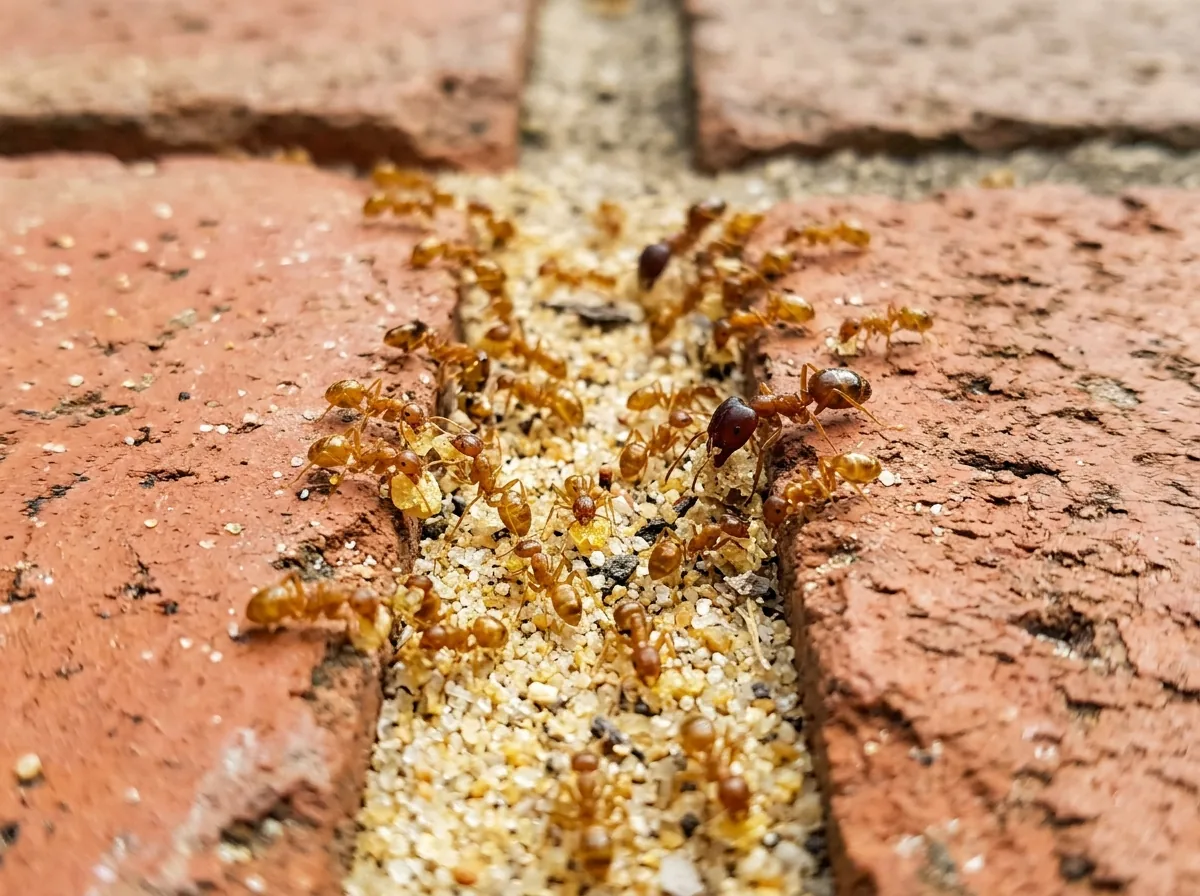
Coastal Brown Ant (Pheidole megacephala)
Aggressive invasive ant forming immense multi-queen supercolonies under driveways and brick paving across Perth. They excavate tonnes of bedding sand, undermining pavers and invading kitchens seeking meat, pet food, and fats.
Common Problem Ant Species Across Perth & Aveley
- Coastal Brown Ants (Big-Headed Ants): Characterised by two distinct worker castes: tiny minor workers and large-headed soldier ants. They excavate vast mounds of sand along paver joints and enter homes seeking proteins, pet foods, and grease.
- Argentine Ants: Highly aggressive, uniform light-to-medium brown ants moving along distinct, wide foraging freeways. They form vast cooperative supercolonies with zero inter-nest hostility.
- Black House Ants: Small, shiny black ants (2.5–3mm) nesting in wall cavities, window frames, and electrical switchplates, relentlessly trailing into kitchens for sweet food residues.
- Meat Ants: Large native red-and-blue mound-building ants commonly found in rural and bush-adjacent blocks across the Swan Valley.
Our Ant Control Process in Aveley
Species Identification
Identifying foraging workers to assess species biology, protein or sugar preferences, and nest architecture.
Non-Repellent Barrier
Applying undetectable transfer agents around slab perimeters and weep holes that foraging ants walk through.
Sub-Paver Infiltration
Deep sand injection beneath brick paving joints to target subterranean chambers and satellite queen nests.
Social Colony Cascade
Foragers share the lethal agent via social trophallaxis grooming, eliminating deep queens within 3 to 5 days.
⚠️ Why Supermarket Sprays Cause "Colony Budding"
Spraying retail surface sprays or boiling water on ant trails kills only 1% of the population (the surface foragers). The surviving colony detects the chemical repellent, enters emergency reproductive panic, and triggers "budding", splitting one single nest into 4 or 5 separate satellite colonies across your property.
💡 Pro Tip for Homeowners
Keep outdoor pet food bowls elevated or place them in a shallow tray of water (a mini-moat). This cuts off the primary high-protein food attractant that draws Coastal Brown ant scouts into your home.
Real-World Ant Eradication Case Study
A residential homeowner in Ellenbrook suffered severe paver sinking on an 80m² brick driveway alongside daily ant trails swarming kitchen bench tops. Multiple DIY spray attempts had worsened the issue over 6 months.
Our technician mapped the trail network to an extensive Coastal Brown ant complex. We applied a continuous perimeter non-repellent transfer treatment and injected a high-potency protein-based granular matrix into the active paver joints.
Complete cessation of ant movement within 72 hours. All 6 paver-undermining nesting centres collapsed simultaneously with zero indoor re-emergence across a 6-month warranty period.
Repellent Sprays vs. Non-Repellent Transfer Chemistry
| Treatment Method | Mechanism of Action | Colony Impact | Long-term Result |
|---|---|---|---|
| Retail DIY Spray (Pyrethroids) | Instant sensory repellent & surface contact nerve toxicant | Only kills surface foragers; triggers colony budding & dispersion | Temporary 2-day suppression followed by multi-nest explosion |
| Professional Transfer (Fipronil) | Completely undetectable; delayed cellular inhibition | Foragers carry agent into nursery; passed to queens & brood | 100% total colony extinction within 3 to 7 days |
| Retail Ant Dust (Permethrin) | Visible powder repellent barrier | Ants simply walk around or dig deeper underneath | Leaves powder residues; fails to reach subterranean queens |
Frequently Asked Questions About Ant Control
Why do Coastal Brown ants dig up sand under my driveway pavers in Aveley?
Perth's loose sandy soil provides an ideal medium for Coastal Brown ants to excavate deep underground nesting chambers. The heat absorbed by dark brick pavers acts as a thermal blanket, warming the subterranean brood chambers and accelerating egg incubation, which is why ants continuously push up mounds of sand along paving joints.
How quickly does non-repellent ant treatment eliminate the nest?
Noticeable reduction in surface trailing occurs within 24 to 48 hours. Total colony collapse (including the death of the subterranean egg-laying queens) is typically achieved within 3 to 5 days as the transfer chemistry circulates through the colony via grooming and food exchange.
Is the ant treatment safe for my dogs and cats?
Yes. Non-repellent active ingredients such as Fipronil are widely used in veterinary flea and tick treatments for dogs and cats. Once the liquid application dries onto paving and foundation perimeters, it poses no danger to domestic pets.
Eliminate Paving & Kitchen Ants
Contact our Aveley ant control specialists for guaranteed, permanent colony eradication.